





































This article is adapted from my informative speech, a ten-minute-long, scripted, and memorized speech designed to inform the audience on a given subject, foster care. I competed with it in the National Christian Forensics Communications Association, placed 11th at the Regional Championship, and qualified for the National Championship in June.
Most families have nine months’ warning to welcome a new child into their home. During those nine months, they learn a lot about the needs of the child joining their home through doctor visits and newborn care books. However, some families have less than 24 hours’ notice before a new child, with an unknown backstory, rules, health problems, and behavior, moves into their home. This is the experience of my family, and countless others who are involved in foster care.
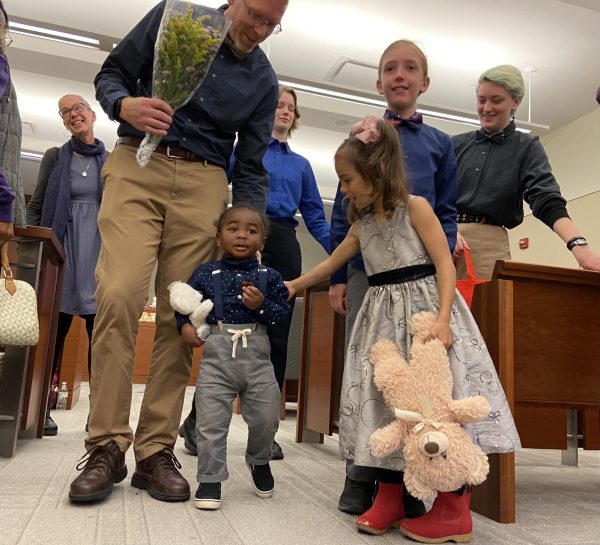
One time, a caseworker, someone who works for the Division of Child Protection and Permanency, called my parents and asked if we had room for an 8-day-old boy. ‘He’ had spent the last eight days in the NICU going through drug withdrawal as his biological mom was addicted to drugs. He was also born very small, and they monitored him to ensure he was gaining weight. At eight days old, he was set to be released, but he had nowhere to go since his mom was incarcerated. Within 24 hours of the initial call, the caseworker came to our house with a baby carrier and the smallest baby I’ve ever seen and told us, “So “he’s” actually a girl, are you still good to take her?” My parents agreed and had a new baby to take care of. Two and a half years later, that young girl, Ken’lei, was adopted as a permanent, legal member of our family.
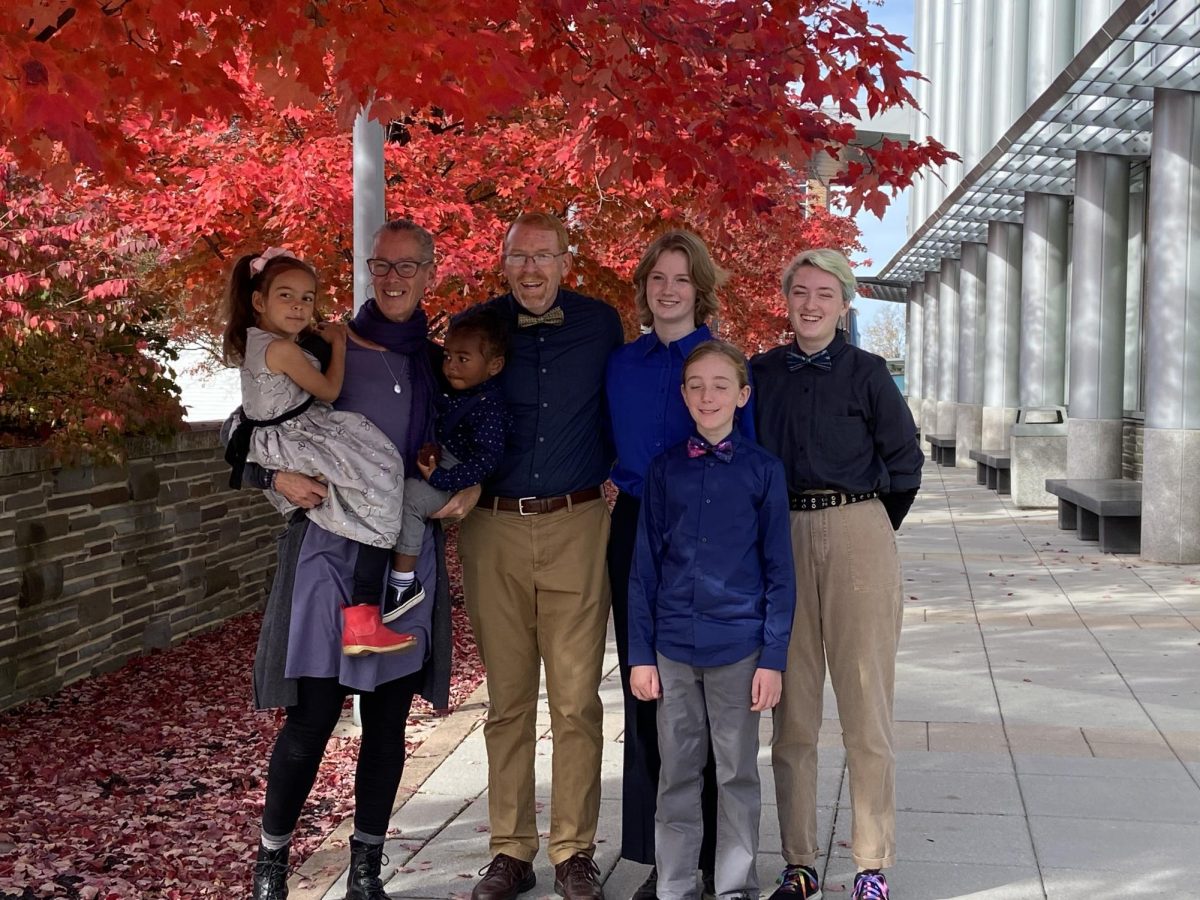
My family has been a licensed foster care family for 16 years; over that time, we have welcomed 25 different children into our home. They have been between eight days old to thirteen, and they have stayed anywhere from a weekend to two of them becoming a permanent part of our family. My youngest two siblings were adopted from foster care, so my family involvement has changed every aspect of our lives. It has made me so aware of the challenges and hardships the most vulnerable population, children, go through. This will discuss the workings of foster care, the hardships in foster care, and how you can help.
First, the actual operations of foster care. Foster care is operated on a state level, so the process can differ dramatically depending on location. Additionally, since conditions and factors vary greatly, there isn’t just one standard or plan. However, the goal of foster care is always the same.
It’s explained best by Childwelfare.gov, “Children and youth thrive when they can live safely with their families in their communities. However, when home environments are not safe, children and youth may temporarily live in out-of-home placements known as foster care…Foster care is a temporary, court-monitored service provided by States to promote the safety, permanency, and well-being of children and youth” (Child Welfare Info. Gateway).
Generally, the end goal of foster care is reunification with their biological family, once the state knows it will be safe for them. However, when home situations do not change, a parent’s rights may be terminated, and the child is now considered a ward of the state. At that point, the child can be adopted out of the foster care system.
As of September 30th, 2024, there were 328,00 children in foster care, according to the Adoption and Foster Care Analysis and Reporting System, a subdivision of the Department of Health and Human Services (AFCARS). 75 percent of children entering foster care have experienced general neglect and 40 percent of children have experienced caretaker drug use. Children spend, on average, a year and a half in foster care (AFCARS). However, the impacts of foster care stay with them for life.
The causation factors of those impacts are complicated, but they often come from trauma before being placed in foster care, leaving their families, moving around a lot in foster care, and a lack of school support. Every child will have different experiences, and so this is not a comprehensive list.
While foster care is intended to help, entering foster care is scary, as children are removed from all they know, and often separated from their siblings, and placed with a new family that they have to get used to. Children in foster care have high levels of behavioral, emotional, or mental issues due to these challenges.
Most notably, adults who were in the foster care system as children have a rate of Post-Traumatic Stress Disorder 5 times higher than the general adult population, 21 percent vs. 4 percent, according to the National Conference of State Legislatures. Other rates of mental disorders are also alarmingly high. The National Conference of State Legislatures also said that, 80 percent of children entering foster care have mental health issues such as anxiety, depression, or PTSD (NCSL).
These high levels mean that access to therapy, early intervention, and stable housing is crucial to helping foster children become functioning adults. This issue is seeing growing awareness; however, resources are still limited, and many foster children do not get the help they need. This may be because they are reunited with their biological family so they no longer have access to the same resources, even though they still need help, or they may age out of the system and so be left with no support.
Unfortunately, because of these issues and a lack of long-term, meaningful support, foster children are more likely to get a poor education and become incarcerated.
According to the National Foster Youth Institute, 50 percent of current or former foster children do not graduate high school. In contrast, only 13 percent of the general population don’t graduate from high school, according to the National Center for Education Statistics (NCES). This lack of education stems mainly from instability. 40 percent of children in foster care experience multiple placements in a year, according to the Christian Alliance for Orphans. Simply put, would you care about school if you didn’t know where you were going to live next month? It’s just not the top priority for children who have unaddressed trauma, who were removed from their families, have to adjust to a new life, and don’t know what their future holds.
Not having an education often prevents former foster children from getting good jobs and keeps them in poverty. Additionally, foster children are more likely to spend time in jail than the general population.
Children’s Rights, a nonprofit dedicated to decreasing the number of children in the prison system, says, “By age 17, over 50 percent of youth in foster care experienced an arrest, conviction or overnight stay in a correctional facility.”
Even if they don’t spend long in prison, the effects can be long-lasting and only worsen their future. Again, according to Children’s Rights, “Youth who spend time in the youth justice system do much worse than their peers on every measure that correlates with success, including rearrest, education, physical and mental health, employment, and stable relationships.”
This has been coined the ‘foster-care-to-prison pipeline’. It’s the unfortunate byproduct of a flawed system that was designed to help. Support after leaving foster care and community-based treatment instead of prison time can make all the difference in helping these children succeed.
The need of these children is clearly great, but that means the opportunity to serve is also great. This brings me to my third point: how you can care for foster children and support those who care for foster children. Foster children are a group in need and we should be helping.
Now that the need is established, how can you actually help? The most direct way with the largest impact would be to become a foster family. That’s not possible for everyone, yet everyone can support foster care. If you know foster families, you could ask how you can support and help them. Additionally, there are many non-profits you can get involved in to help. Personally, some ways that people have supported us were dropping off a meal the first couple of nights a child was placed with us, and giving us some of the clothes and items you need for a newborn. After all, most people have nine months to collect it, while we often have a day!
At the most basic level, you can help just by being more aware of the foster system. ‘Being more aware’ means recognizing that foster care is stressful and children may be acting in a way that’s not usually acceptable. A child’s actions or parents’ response may seem weird or bad, but nobody knows the full picture. Trying to offer helpful advice will often make the parents feel worse. Additionally, being more aware in discussions about families since children may have atypical family dynamics.
Overall, there are many children in foster care who face unique struggles. The struggles will follow them for the rest of their lives and will not end when they leave foster care. There are problems with the system that are improving but have a lot of work left. We can help them, by either getting directly involved, supporting those directly involved, and being more aware of your thoughts and actions.