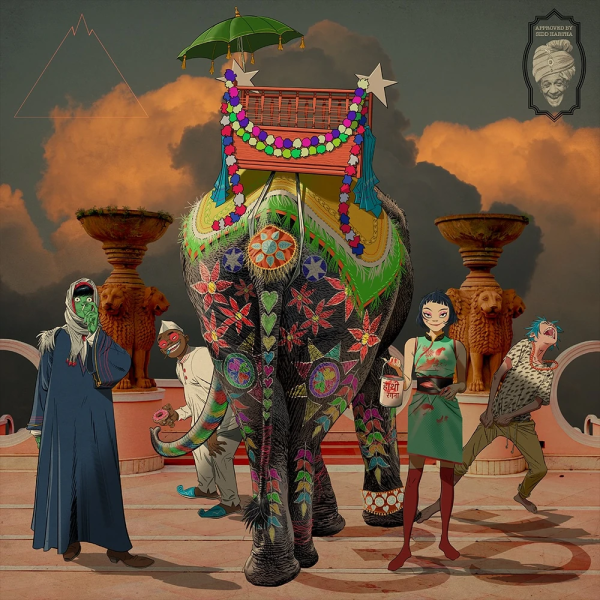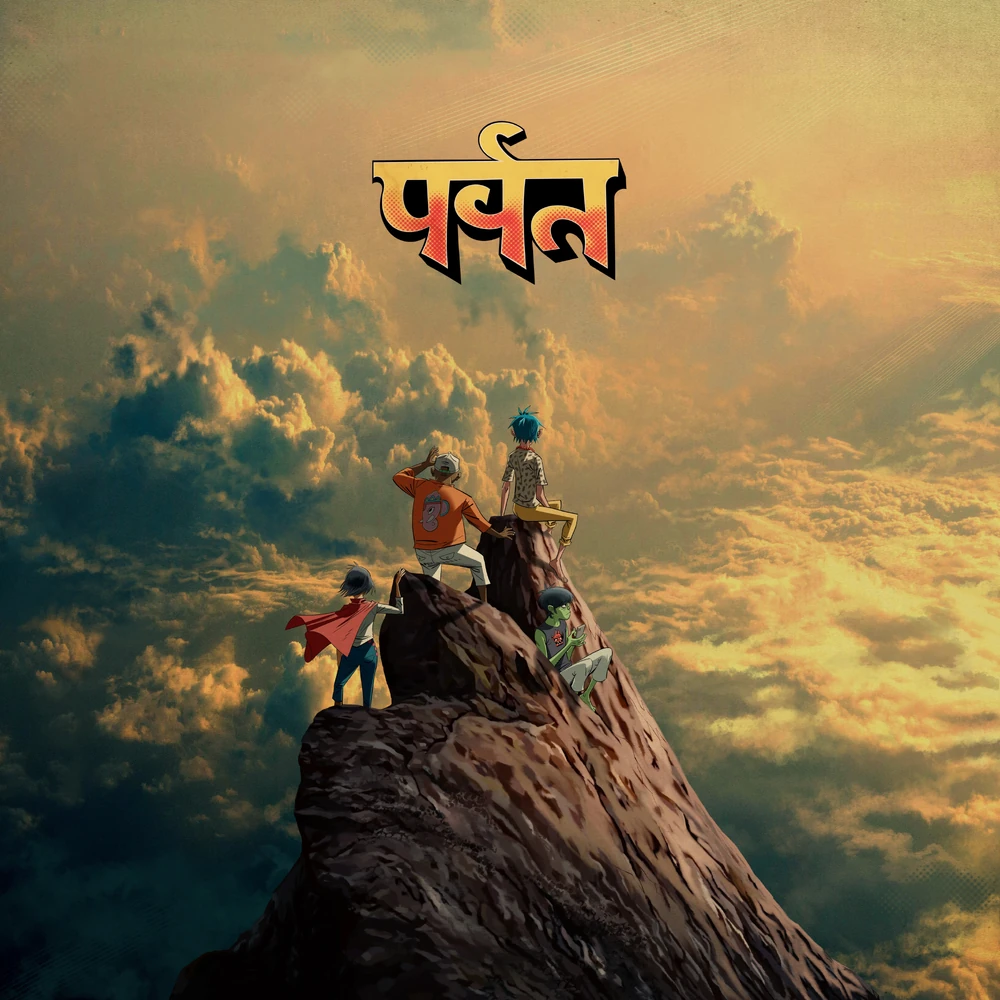
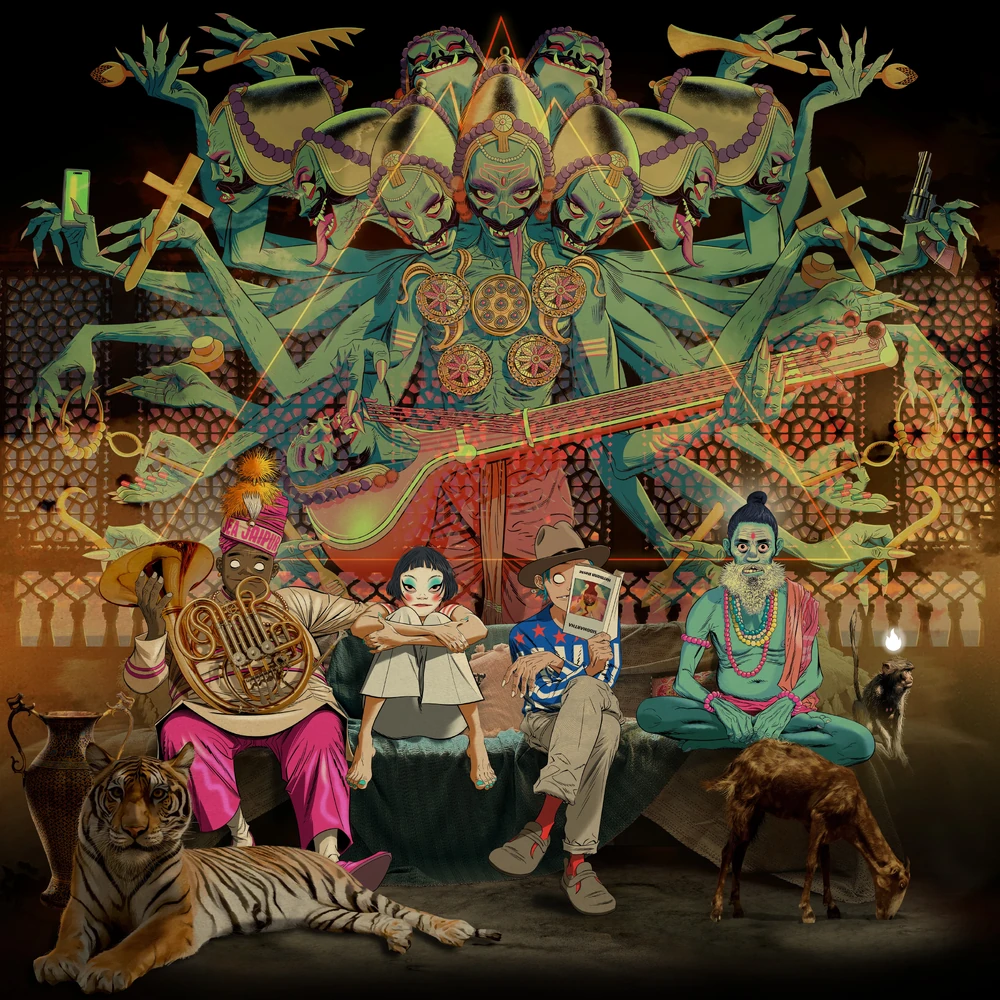
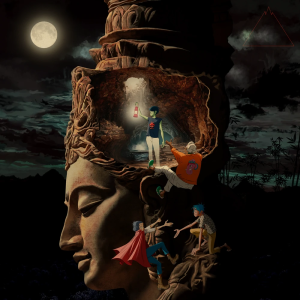
The Mountain, the ninth studio album from the virtual band Gorillaz, created by Damon Albarn and Jamie Hewlett, featuring fictional band members Murdoc Niccals, Stuart “2D” Pot, Russel Hobbs, and Noodle, is the group’s most recent venture, released on February 27th, 2026. Inspired by Albarn and Hewlett’s trip around Asia following their respective familial losses, the album takes heavy influence from Indian instrumentation and culture. Described as a “return to form” of the thematic storytelling of past albums, such as Demon Days and Plastic Beach, The Mountain focuses on themes like life, death, grief, the afterlife, and finding beauty in the unknown.
Accompanied by a hand-drawn music video, The Mountain, The Moon Cave, and The Sad God, it explores the contrast of humanity and the spiritual world. Adding to these themes, The Mountain features many posthumous collaborators, such as David Jolicoeur, Proof, and Mark E. Smith, using old recordings and unused takes to bring these artists back to life in this album about life and death.
When talking about the album, Albarn stated that this album would be “very different” compared to previous albums, Hewlett saying that listeners should “listen to the album from beginning to end”, adding that they were:
So here, the journey of The Mountain will be reviewed and analyzed, deconstructing the themes of the 15 songs in this album.
The Mountain – The titular track of this album serves as an instrumental intro for the album. According to Jamie Hewlett, this was the first song that Damon Albarn sent him after their first trip to India. The Mountain features Indian musicians Ajay Prasanna, Anoushka Shankar, as well as Amaan and Ayaan Ali Bangesh. This song is carried by its heavy use of flutes and its influence from Rajasthan folk music.
The song starts slow, before becoming more complex as more elements are thrown in to emphasize the repeating flute melody. After the peak of The Mountain, the song slowly dwindles into a distorted chorus repeating “The mountain” as well as “Where all good souls come to rest.” This song does a perfect job of serving as a gateway to the calm, spiritual mood of the album, which works as a beautiful showcase of what this album has in store and is the perfect intro for Gorillaz’s ninth studio album.
The Moon Cave – The second song from the album features Indian singer Asha Puthli, American musician Jalen Ngonda, the rapper Black Thought, the late soul singer Bobby Womack, and De La Soul’s rapper Dave Jolicoeur. The Moon Cave is actually a reworked version of a scrapped track called “Float Tropics”, which was originally made in 2009. Damon wanted this song to serve as a tribute to Dave Jolicoeur and Bobby Womack following their respective deaths.
The Moon Cave tackles themes of what comes after death, the concept of unity, and spiritual journeys. The third verse of the song, rapped by Black Thought and Dave Jolicoeur, serves as a groovy ballad of creative freedom. Fusing with the themes of spiritual cleansing and the emotional sanctuary of the Moon Cave from the uplifting main chorus of the song—sung by Damon—makes this a catchy, yet thought-provoking synth-pop track of what might come after death.
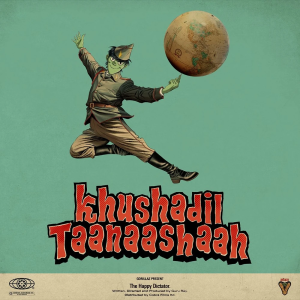
The Happy Dictator – The lead single of the album, which was released on September 11th, 2025, features the American pop duo Sparks. This song was inspired by the trip Damon took with his daughter to Turkmenistan, where he learned of the dictator Saparmurat Niyazov, who decreed that the citizens must only think happy thoughts and ban all negative news. The Happy Dictator serves as a satire of this notion, with the repeated phrase “Oh, what a happy land we live in” after Damon’s lines.
Damon described the song as being:
These themes are further emphasized in the lines “when have you felt this way I ask you. When have you felt better off than right now” and “I am the one to give you life again. I am the one to save your soul, amen!”. Despite the manipulative words of this art pop track, the way the song is grandly presented makes it feel uplifting, just as Damon intended.
The Hardest Thing – This track, featuring Nigerian afrobeat pioneer Tony Allen, serves as an intro of sorts for the next song, “Orange County”. It is the shortest song of the album, feeling like a melancholic dream. The song distinctly starts with Tony Allen’s vocals, spoken in Yoruba, repeating “Oya, ẹ dide, ẹrori” thrice before moving onto Albarn’s vocals, which is a slowed, distorted excerpt from the next song.
Despite this song not contributing much lyrically, the instrumental segment after the vocals is a euphoric 50 seconds, using a trumpet solo with a flute rhythm backing it before ceasing, leading to “Orange County”.
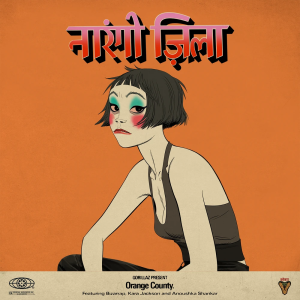
Orange County – Every album has its big seller song. Where Gorillaz’s second and most popular album Demon Days had “Feel Good Inc”, I believe this album’s big seller is this very song. “Orange County”, featuring Bizarrap, Kara Jackson, and Anoushka Shankar, is an upbeat, yet bittersweet ballad of loss and longing. On the surface, this song sounds simple and feels light with its chipper whistling melody repeating throughout the song, and the lyrics, gently sung by Albarn and Kara Jackson, paint a poignant story.
Lines like “And I’m not your enemy. Your legacy frightens me, will I keep it gold? Or will it spoil. Before I get the chance to grow old” show the themes of longing in this melody, and the lines foreshadowed in “The Hardest Thing” add in the themes of loss and the emotions that come with that. “You know the hardest thing is to say goodbye to someone you love. That’s the hardest thing.”
Despite these melancholic themes, the song is light and hopeful—a perfect blend of these contrasting emotions and a cathartic representation of how losing someone dear isn’t all misery. Despite the song’s simplicity compared to other songs in the album, Orange County, the song of upbeat sadness, serves as a beautiful look into the emotions that come with losing someone you love.
The God of Lying – “The God of Lying”, featuring British post-punk band IDLES, is by far the most unique song of the album. This song is, as I put it, the “most Gorillaz sounding Gorillaz song” of the album, faintly using the piano motif from one of their first songs, “Clint Eastwood”, as well as fitting in with the overall vibe of their first album. The God of Lying is a trip-hip song that nihilistic-ally questions everything.
Lines such as “Are you happy with your housing? Are you climbing up the walls? Are you deafened by the headlines? Or does your head not hear at all?” as well as “Do you love your blessed father? Anoint by fear of death. Do you feel the lies creep on by? As soft as baby’s breath.” emphasize this feeling of uncertainty, questioning life, society, and our beliefs—with each line sung by Joe Talbot of IDLES.
Gorillaz frontman, Stuart “2D” Pot, said while speaking on the song “Can I tell you a secret? Doubt is very tiring but questioning is really good for you,” which perfectly encapsulates this uncomfortably raw earworm.
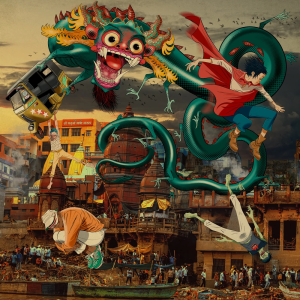
The Empty Dream Machine – Featuring rapper Black Thought, Johnny Marr, and Anoushka Shankar, “The Empty Dream Machine” is a melancholic reflection of loss, grief, and the struggle of moving forward. The song is described as a “quiet moment in the middle of the album” by Black Thought, which makes sense, seeing as this self-reflective, slow song of pathos takes place after the unnerving nihilism of “The God of Lying” and before the sprawling ballad of “The Manifesto”.
The namesake of the song, “The Empty Dream Machine”, is represented through the themes of broken promises and the emotional exhaustion that comes from them, which are poignantly conveyed in this track. Think of it as a machine that produces empty promises rather than progression. This can be seen in the lines: “The promises we make. They clock us in at night and check us out the next day. Tired, but not forever so. The feeling of the day before was really much more than anyone could pray for” being immediately followed up with “Empty dream machine without you.”
The powerful climax of the song—a soulful duet—furthers these themes of emotional exhaustion with surreal feeling back-and-forth lines, such as “Love you in that color”, “I need you on my team”, and “No automatic replies” before both voices colliding powerfully with a synced “Empty dream machine without you.”
The Manifesto – “The Manifesto”, heavily featuring Argentine rapper and singer Trueno, as well as the late American rapper Proof—who brought back with unused audio recorded two decades prior to this song’s release—is by far the longest song of the album, clocking in at 7 minutes and 19 seconds. This sprawling song wears its influences on its sleeve, featuring a plethora of Hindu musicians providing bansuri, sarod, and brass instruments to give this track its layered, diverse feel.
When released as a single, “The Manifesto” was split into two parts, the first featuring Trueno’s segment, and the second featuring Proof’s segment. The song as a whole serves as a catchy contemplation of the cycle of life and the afterlife. Trueno’s half is an upbeat rap describing a walk into the light, leaving behind the past and freely repeating “I have nothing to lose.” The bridge into the next act of the song is sung by Albarn, where he sings about “The Mountain”, a symbol of humanity and our climb through life. However, as sung in the lyrics, “we must not lose ourselves in this journey.”
On the other side of the coin, Proof’s verse is a haunting, dark trip hop, acting as a raw counterpoint to Treno’s verse, rapping about the dark reality of death. This dark persona of Proof’s is a stark contrast with Trueno, where the latter leaves everything behind, and the former is consumed by a chaotic, violent environment.
Coming in as a surprise after Proof’s rap, returns Trueno. Where Trueno’s first verse was relaxed and upbeat, his return in the third verse continues the forceful, intense style of Proof’s verse. However, instead of furthering his grim themes of violence, Trueno’s rap acts as an antidote to what Proof’s verse represents, as he re-purposes the chaotic energy into a spiritual force. From the sprawling diversity of the track’s sound to dual-sided themes of life, “The Manifesto” most definitely earns its expansive length.
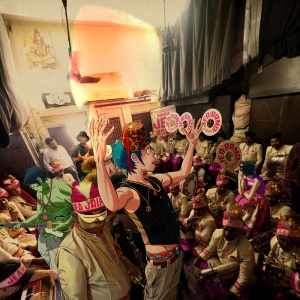
The Plastic Guru – Inspired by Albarn and Hewlett’s trip to an ashram in Rishikesh—where they met a guru who seemed to have looked them up in advance—”The Plastic Guru” is an electronic rock opera featuring Johnny Marr and Anoushka Shankar. While the band was originally hoping to use unused vocals from the late Lou Reed, a past collaborator, they decided not to go forward with this idea due to Reed’s instructions not to use his music posthumously. As a substitute, Albarn used a synthesized voice reminiscent of HAL 9000, from 2001: A Space Odyssey, to read Reed’s lines for the intro and outro of the song.
When talking about their inspiration for this track, Hewlett said:
This song serves as a reflection of Albarn and Hewlett’s jaded feelings after their run-in with the guru, highlighting themes of artificiality and the emptiness of modern life. It also paints a picture of how it feels to seek spiritual truth in this modern, consumeristic world of artificiality. The name of the song, “The Plastic Guru”, serves as a perfect reflection of the themes of this song. A plastic guru, an empty, artificial spiritual guide, is quite the contrast. The vocals of the song add to this idea, as well as the soulful lyrics, and especially the grand chorus full of life, singing “We believe what we choose. Is that not the truth?” This reflects a true guru, contrasting starkly with the robotic voice of the intro and outro, which reflects the “plastic” artificiality of modern life and the guru Albarn and Hewlett met.
Delirium – “Delirium”, posthumously featuring Mark E. Smith, is an operatic, psychedelic ballad of isolation and anxiety, as well as serving as a commentary on echo-chambers. The song begins with Damon singing an anxiety-inducing message of an incoming doom, reflecting the delirium that the song is named after. The line “I’ve been out in the chat rooms waiting for the end to begin” acts as commentary on people who isolate themselves in echo-chambers that perpetuate ideas, in this case, the collapse of society.
Albarn’s verses, it’s repeated fear of “A new god,” and the speaker referring to themselves as a “Young man with a broken wing” adds to this idea and serves as a critique of the rise of disillusioned youth. These themes reach a head in Mark E. Smith’s grand chorus, which utilizes outtakes from his previous sessions working with Gorillaz, representing the anxious, frenzied delirium of this state of mind.
Overall, this song is like a breaking point in this album; where earlier songs of this album had a structure in the titles being places, symbols, or abstractions, “Delirium” is the title that stands out the most. The song itself further emphasizes this point by being the most chaotic and out-there song of the album.
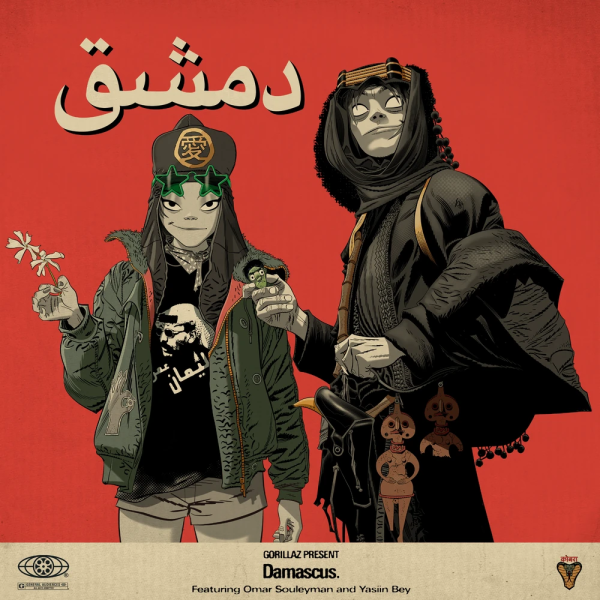
Damascus – Heavily featuring American rapper Yasiin Bey, also known as Mos Def, as well as Syrian singer Omar Souleyman, “Damascus” is a finalized version of an old outtake, originally titled Fresh Arrivals. This funky Arabic hip hop track takes its name, Damascus, from the capital of Syria, using the name as a symbol of war and survival. The song itself is a tribute to Syrian resilience during the Syrian refugee crisis, as highlighted by Souleyman’s feature.
Focusing on the experience and survival of the event, the chorus directly reflects the refugees’ plight in the repeated lines “New arrivals, fresh survival” . The song was used as an anti-war, pro-humanity tribute, with the message of criticizing the displacement of people seen in the line “Ship from Damascus, Nemo Point”. Fittingly, this song premiered in a Palestine Relief concert, emphasizing the message of the song and spreading awareness for Palestine, which is currently going through a similar tragedy to the Syrian refugee crisis.
The Shadowy Light – Featuring Indian singer Asha Bhosle, flautist Ajay Parsanna, sarod players Amaan and Ayaan Ali Bangash, as well as Welsh musician Gruff Rhys, “The Shadowy Light” is a deep song reflecting the cycle of life as a whole. When asked about the song, Asha Bhosle admitted to initially being hesitant to work on the track, saying in an interview with Vogue India that this didn’t feel like an “everyday kind of song”. However, the deep meaning of the lyrics moved her enough to work on the song.
The beginning of the song, sung in Hindi, depicts a traveler sailing through the water of the River of Life—which is a metaphor for the reflection of one’s earthly duties, relationships, and liberation. As described by Bhosle in the Vogue India interview, she meaningfully explains:
The chorus of the song, sung by Albarn, focuses on the “shadowy light”—the namesake of the song—which represents the peaceful space between being and non-being. This point is further painted in the bridge, sung by Rhys, where he repeats “I shed, I shed my skin. The end is the beginning”, emphasizing the rebirth of the cycle of life and rounding out the song soundly; beginning with a self-reflection of your life, the look into the shadowy light of the end, and then the rebirth.
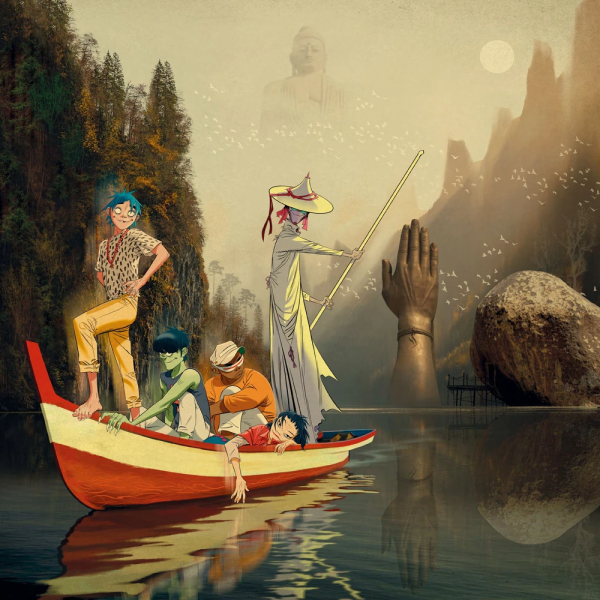
Casablanca – “Casablanca”, featuring Paul Simonon and Johnny Marr, is a surreal, nuanced song, being both bleak and soothingly beautiful. The song explores themes of emotional numbness mixed with a profound affection, invoking both deep sorrow and euphoria. When the song begins, the instrumentation is unsettling in a way, with the desolate lines soulfully murmured by Albarn, adding to this bleak vibe. “I’m here in the painted world of the blue sky where the gamble is the runway which leads to the mountain And the inmates’ cells always remain open as they stare into the abyss”.
These opening lyrics paint an artificial, emotionally numb world. However, as the song progresses, the grim nature is broken with profound catharsis. The instrumentation blooms to be soulfully euphoric, the chorus, sung in the same tone as before, whispers: “I don’t know anything that feels like this”. Despite Albarn singing in the same soulful tone, the instrumental goes a long way to illustrate the shift in tone, with a more complex, high melody using long strokes on the strings.
When this song was written, Albarn and Hewlett were both experiencing major grief at the loss of their respective fathers, which greatly influenced this song. This track in particular moved Hewlett to tears, as said in the Rolling Stone article Gorillaz Look Beyond Mortality. This insight gives this song a whole new meaning, as the song represents the emptiness of grief and the deeply moving emotional release that inevitably comes with mourning.
The Sweet Prince – The penultimate song of the album, “The Sweet Prince”, featuring Indian musicians Ajay Prasanna and Anoushka Shankar, as well as Johnny Marr, depicts the final moments Albarn had with his father, Keith Albarn, as he passed away. The track draws inspiration from Indian culture and their perspective of death, using its imagery in lines such as “And the sword you hold in your hand. Well, its mighty blow will set you on your patterned path into the next life,” representing his father’s passing.
The song as a whole symbolizes death, as it re-imagines the loss of life as a “mighty blow” from a sword that spiritually leads to the next life. These themes of grief are shown rawly in the lines “I found myself by your bedside, looking out across the void. I was trying to say I love you, but you just looked the other way,” which highlights the emotional core of this song and the meaning behind its creation.
Furthering this idea is the repeated phrase “Sweet prince, don’t be sad. You were never meant to be here,” to emphasize these themes with this symbolic imagery. The soulful singing done by Albarn adds to these themes of grief and the afterlife in this spiritual lullaby, as the raw emotion in his vocals adds to the meaningfulness of the event of the death of a loved one.
The Sad God – The final song of the album, “The Sad God” features American rapper Black Thought, Indian flautist Ajay Parasanna, and Indian sitarist Anoushka Shankar. The song serves as the melancholic climax of the journey of The Mountain, depicting a sad god’s resignation and lament over humanity’s misuse of their gifts. These themes of loss reflect the experience Albarn and Hewlett experienced throughout the creation of this album, and the themes of environmental destruction and spiritual emptiness that are greatly relevant to today’s society.
Rather than anger or wrath, the titular sad god expresses a deep grief over humanity, a divine disenchantment over our use of this god’s gifts for self-destruction. The first verse showcases these themes perfectly, “I gave you love to fill old glory. I gave you dreams, you wrote the story. I gave you white sails to reach the sun. I gave you atoms, you built a bomb. Now there is nothing and I have gone. No more mountains, no more song. No more prayers sent up into space. Only screens left to see your face”.
However, despite these themes of lamentation, the song’s instrumentation remains beautifully ethereal, making this message feel like a wake-up call for us to be better. Adding to this emotional instrumentation, the instrumental calls back to the first song of the album, using the flute motif from The Mountain. This song serves as the perfect finale to this album, as it not only works as a reflection of The Mountain as a whole, but is a poignant message for us as a society to learn from—all wrapped into a beautifully made song that reaches the depths of the soul.
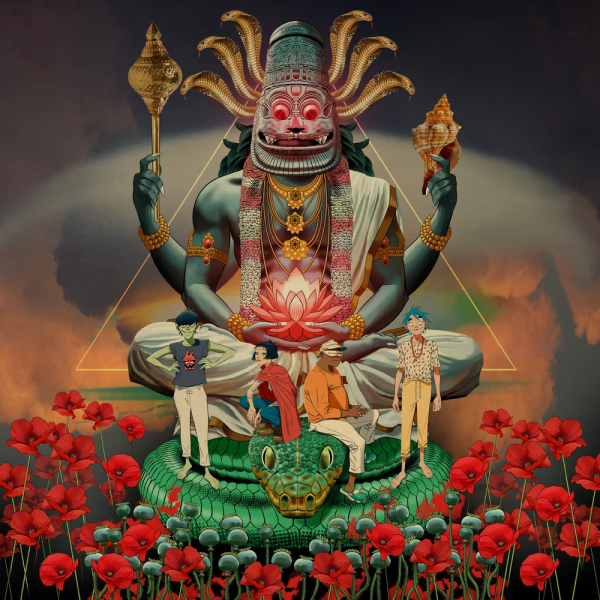
For me, this album is—without a shred of a doubt—a 10/10. While my favorite song of the album switches between “The Happy Dictator” and “Orange County”, the magnum opus of The Mountain, in my opinion, is “The Sweet Prince”. The emotion put into the song is palpable with every soulful word Albarn utters, and knowing the story behind the song further cements this song as the emotional peak of the album, which is fitting as the penultimate song of an album quite literally called “The Mountain.”
As a whole, The Mountain is a journey that explores themes of life, death, and beyond, as well as the emotions that come with those topics. This album dropped at the perfect time, as with how desolate this modern society we live in can be, The Mountain serves as a thought-provoking look into these themes and offers an emotionally raw experience to those who put an effort into truly listening to this album. It also serves as a show of passion that only a human could make, a stark contrast with the artificially made slop made by soulless corporations that flood our media.
This album wears its influence on its sleeve, serving as a love letter to the rich culture of India and other South Asian countries, ranging from their music, artists, and spiritual beliefs. You can feel the human passion in each song, from the nuances and emotions of the production and collaborations of each song as well as the soulful, raw vocal performances from every singer involved—especially Damon Albarn—as well as the complex, thought-provoking themes that every song highlights.
While just listening to the music with no precognition of the stories behind the production serves as a great experience, knowing about the meanings behind this album and its creation adds a whole new level of complex poignancy to this passion project, which makes an already beautiful, passionate, spiritually raw album that much more moving as an emotional experience.