Should schools be able to monitor students both outside the classroom and outside of school hours on school-issued devices? The answer to this question, which continues the age-old debate of how much schools should be able to monitor and control their students outside of school, is currently being decided by the Arizona District Court inside the case of Merrill vs. Marana Unified School District.
After receiving a bad grade on his English assignment in October, 2024, a student currently attending Marana High School in Tucson, Arizona, wrote a draft email to his teacher. The email, which was filled with jokes, was not intended to be, nor was it actually sent to the teacher. It was simply meant to be a means to express his feelings—almost like a journal of sorts.
In the final line of this email, he stated:
“GANG GANG GIMME A BETTER GRADE OR I SHOOT UP DA SKOOL HOMIE.”
As soon as he typed out the line about shooting up his school, he realized the mistake he had made and deleted it almost instantly; the line was typed out on his computer for no more than five seconds.
Still, this statement flagged the school’s surveillance software, Gaggle. Within an hour, the student’s mother was contacted via phone by the school’s principal, as well as emailed a screenshot—auto captured by Gaggle—of the supposed threat.
Gaggle, which is used in many schools, is a program that allows teachers and administrators to monitor students’ screens on their school-issued laptops. This program is not unique, as nearly every school across the nation—including Gateway—has something similar to this. Specifically, most schools use either the aforementioned Gaggle, Securly, or, in the case of Gateway, GoGuardian.
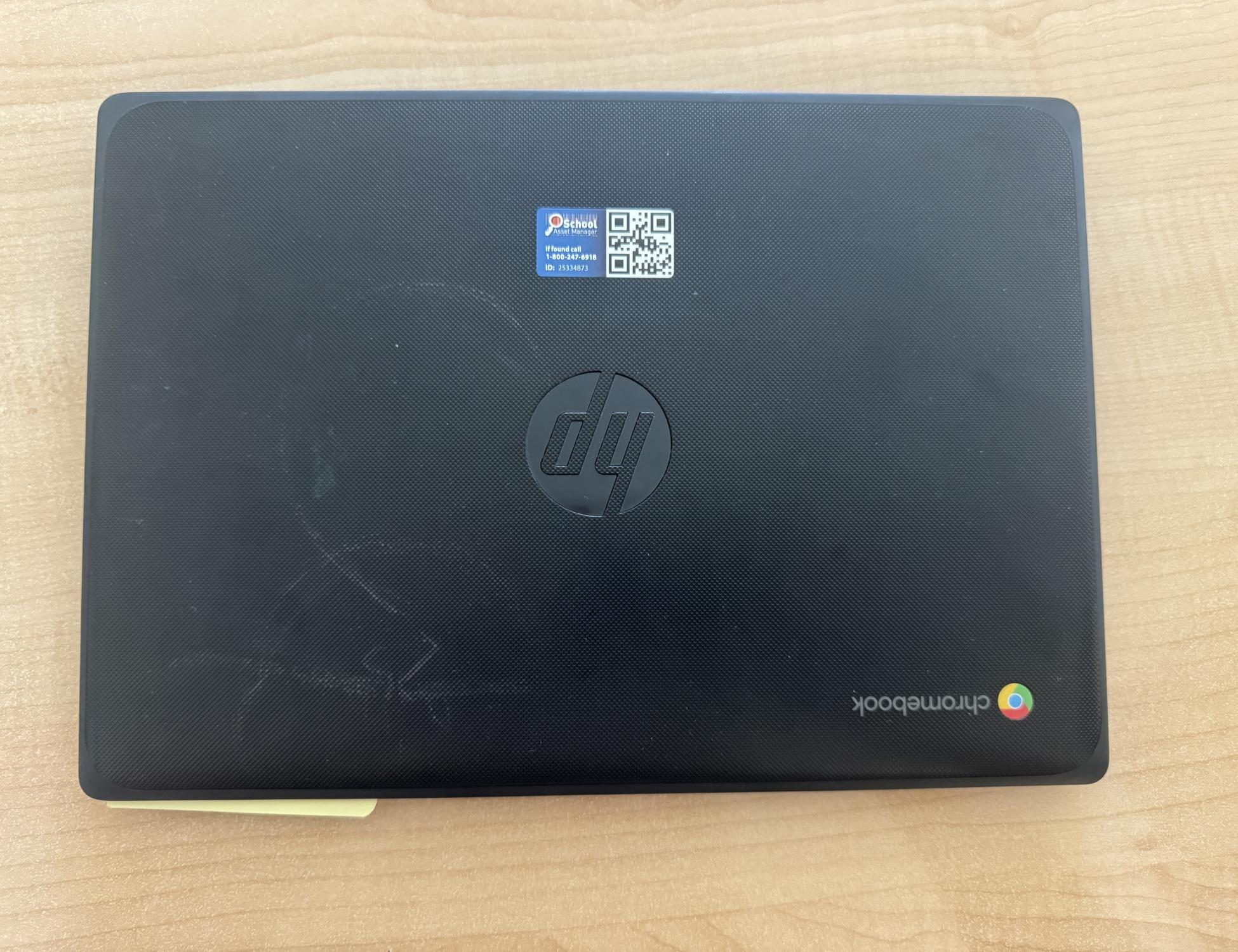
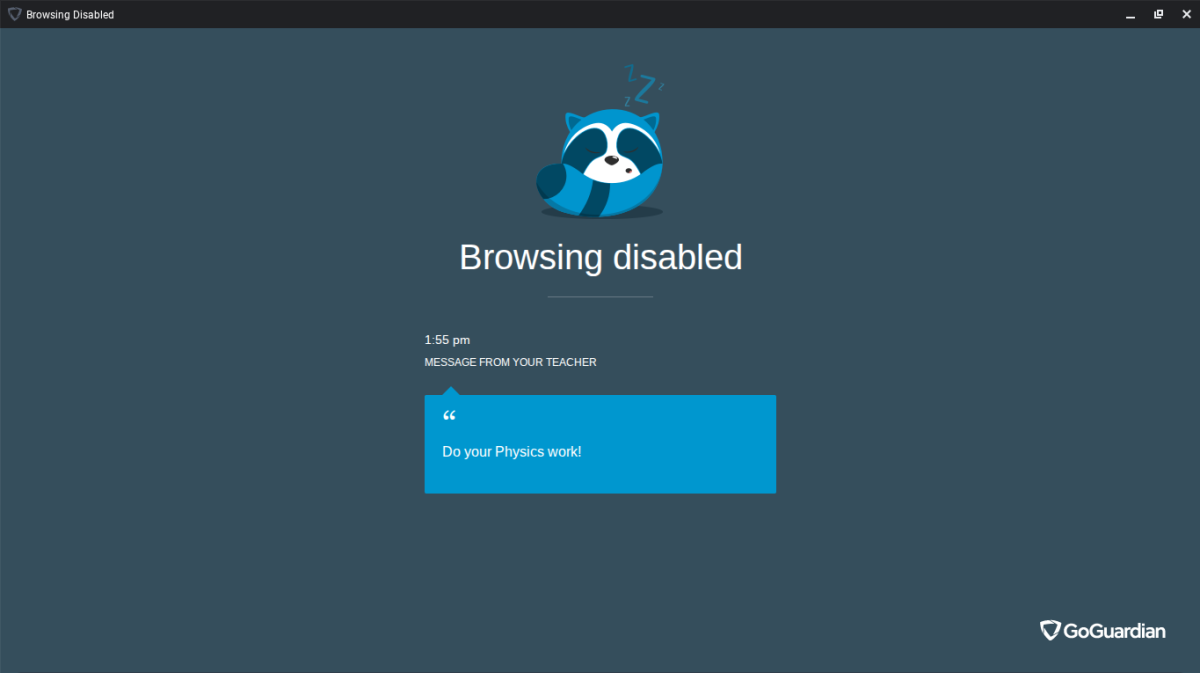
GoGuardian is installed on every single Gateway-issued Chromebook, meaning teachers and administrators can monitor students’ every move. While the intention behind the program is to stop students from cheating and being off-task, it does give the ability to look at students’ activities outside of school hours and property. It also has the ability to disable a student’s Chromebook for whatever reason may seem necessary.
However, his mother already knew about his statement—and in fact, the entire email.
When writing out this email, the student began reading it out to their mother (Karalee Merrill) as a joke. His line about shooting up the school was meant to be like the rest of their joking lines in the email, such as “Mister Mister I want to date your sister” and “Skibidi toilet my grade is in the toilet”
Regardless of whether his final line was an actual threat or not, he faced punishment: up to 45 days of suspension. However, they reduced the sentence to nine days, but only after he had already served eleven. Due to his suspension, he and his family are worried about this affecting his chances of getting into college.
Following this, the Merrill family took Marana Unified School District (MUSD) to court, claiming that the district violated their son’s First Amendment right to free speech, as well as his Fourteenth Amendment right to due process. They pressed the latter as they believed MUSD gave him punishment without a chance to prove himself innocent.
Specifically, in the interim complaint filed by the Merrill family, it states:
Aaron Baumann, who is representing the Merrill family in the case and is an assistant teaching professor at Arizona State University’s Sandra Day O’Connor College of Law, said:
“The law is clear that students, even when they’re students of a public school, have a right to speak at home, when they’re off campus.”
However, in MUSD’s Student and Parent Chromebook contract, it states:
While it is unclear if Gaggle counts as one of these “safety features,” the Merrill family argues that, regardless of these features, the “threat” made by their son was obviously a joke and by no means credible, meaning that the school should not have been able to discipline him for speaking off campus.
But what counts as a credible threat?
In the eyes of MUSD, any mention of the words, or variation of, “I am going to shoot up the school,” registers as a credible threat to them, no matter how brief or unserious it is. They also argue that based on the previously stated contract, they had the right to monitor the laptop “24/7, no matter the location.”
If the court rules in favor of MUSD, it would set a new legal precedent for schools: they are allowed to monitor their students’ school-issued laptops regardless of time or location.
If so, many worry that this would restrict the free speech of students, as schools would have the ability to monitor their school-issued laptops at all times and locations, which could hypothetically silence students’ free expression.
According to the Pew Research Center (2018), one in four teens from low-income families—defined as having a household income of less than 30,000 per year—do not have access to a personal home computer. For these teens, their school-issued laptops are their only source of a computer, whether they use it for school or for leisure.
Those in favor of Merrill are concerned that if schools do gain the ability to monitor their students 24/7, it would inadvertently force students of low-income families to be constantly monitored and watched—even at home. They worry this could forcibly limit their expressions—especially ones that are anti-school in any variety—as the school would be able to punish a student for even one keystroke they do not like.
However, proponents of MUSD argue that it is necessary to monitor students to ensure the school’s safety. According to the National Institute of Health, there have been 1,453 gun-related incidents at schools across the period of 1997-2022. This incredibly depressing number has risen since then, with hundreds more happening per year.
With the worry of school shootings being ever prevalent, people siding with MUSD worry that it is extremely important for schools to keep track of any possible threat, as even just one missed threat could lead to a tragedy.
They also argue that since the laptops are owned by the school, they should have the right to do whatever they deem necessary, as it’s their property—not the students. Work-issued laptops, they argue, often have similar levels of surveillance software, so how is this any different?
Overall, Merrill vs. Marana will most likely go down as a landmark case for students’ right to freedom of speech and expression in a similar vein as Tinker vs. Des Moines. Whatever precedent is decided will end up guiding schools and students for years, if not decades to come.