



































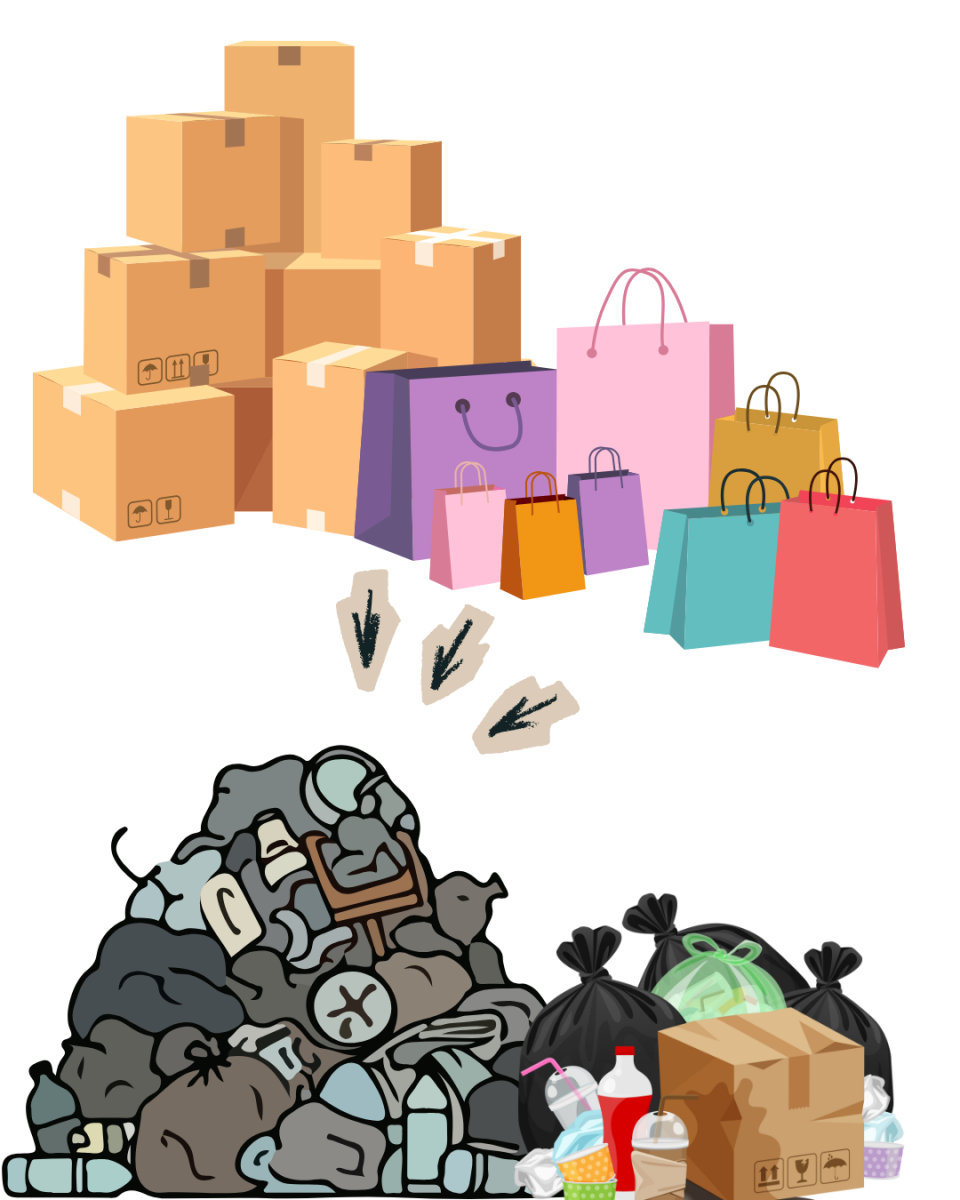
Coming out of the Christmas season, it seems like there is an endless barrage of stuff, no matter where you go. There are New Year’s Day sales, Christmas hauls, the new trend predictions, and ads. Everyone is selling something to change your life in 2026, without any backing that it actually will. It’s a culture of dissatisfaction, comparison, and overconsumption.
At the same time, we are using more of Earth’s resources than ever, at an unsustainable rate. The Global Footprint Network calculated that, based on humankind’s needs vs. Earth’s ability to produce resources, we need 1.8 Earths to support us. As there is only one Earth, our consumption levels will catch up to us, and in many places, it already has.
However, not everyone contributes the same to this crisis. Rich, well-developed countries, such as the U.S., contribute disproportionally to overconsumption. Meanwhile, the first countries to feel the effects of overconsumption are often third-world countries. They might be unable to access clean water, enough food, or safe shelter. This isn’t to say that everyone in the U.S. has access to those necessities, but that the issue is not as severe as it is in other countries.
“We live on a finite planet that cannot support endless growth and unequitable, unchecked consumption. The pressure to constantly consume is driving destructive resource extraction, pollution and waste, and contributing to the climate and extinction crises.” –Jennifer Molidor, Senior Food Campaigner at the Center for Biological Diversity
Overconsumption produces pollution, greenhouse gases, and waste. It leads to more climate change and fewer available resources. In the same manner that people do not proportionally contribute to overconsumption, the effects of overconsumption are not felt evenly. For the group of people who use most of Earth’s resources, they don’t ever realize that resources are strained.
However, for the majority of Earth’s population, those strained resources have a very real impact.
“But for the majority of the world’s population, not being able to afford things that are being overproduced and not having access to resources that are overconsumed can be a death sentence. Many of those people will suffer from malnutrition and dehydration, and many more will die of diseases that could easily be prevented or cured with proper healthcare and healthy living conditions.” –Net Impact .org
Most of this overconsumption comes in the form of food waste. One-fifth of food globally is wasted, and in the U.S., that number rises to one-third of food being wasted. In other words, the U.S. wastes 92 billion tons of food every year. This waste happens everywhere, from the farm to the plate, so no one thing is to blame.
However, it is a pressing issue as 47 million Americans are food insecure. We live in a world where there are millions of Americans going hungry, and billions of tons of food are wasted every year. If we saved half of the wasted food, every hungry person in the U.S. could have three meals every day. This system, where people go hungry, not due to a lack of food in general, but because the food is being wasted, can not go on. The moral and environmental impacts are simply too great.
This system must be changed, and there are concrete actions an individual can take to help. They include donating to food pantries, not buying food you won’t eat, and organizing to pressure larger society change. However, overconsumption does not end with food. It is pervasive, making its way into every aspect of our culture.
How often do you see Shein hauls, an influencer trying on several dresses for the same event, new accessories for technology, or ads promoting the next “micro-trend”? Not only is fast fashion dependent on exploitative labor practices, but it is also entirely unsustainable and damaging to the planet.
Fast fashion produces around 10% of global carbon emissions, while making clothes that get thrown away after 10 wears on average. 85% of textiles produced will end up in a landfill by the end of the year. Those textiles are often made of polyester, also known as plastic, and pollute our waterways with microplastics. Fast fashion creates waste while polluting our Earth and water.
This fast fashion is supported by social media and the desire to fit in. Influencers make a living by selling a lifestyle to their audience, who then turn around and buy items to try to achieve this ideal life.
Typically, this takes the form of an influencer promoting looks like “mob wife aesthetic” or “coastal grandmother aesthetic”. They don’t actually mean anything and have no longevity, but they put the influencer in the spotlight for a week or two while getting people to buy stuff.
Very few people actually need what they are buying; more often, it’s driven by the desire to have something new and shiny. Yes, some people buy from fast fashion because that’s all they can afford. However, I think that group is smaller than people might think. As a society, we don’t need all this stuff, and this stuff comes at a price to our Earth, our future.
So no, I don’t want to see your Shein haul. I would much rather you don’t buy something new or buy an item second-hand.