








































The time has come for society to seriously consider relieving Cupid of his matchmaking responsibilities. Not only has he been slacking in both efficiency and the ability to provide people with true romance, but every target he aims for is completely hit or miss. But hey, when Valentine’s Day rolls around and love is in the air, it feels like anything could happen. Right? Wrong. While Romeo and Juliet are planning beach picnics, the rest of the world is spending the day on the couch watching campy love confessions in the rain and eating pints of ice cream. Which might actually be worth more than going on that beach date, as long as one of the six right films are on TV.
Honorable Mentions: Edward Scissorhands
For context, this is a film derived from filmmaker Tim Burton and screenwriter Caroline Thompson. Contrary to the average romance film, this tragedy tells the story of a man named Edward who was made by the hands of a lonely inventor who isolated himself from the world. However, the inventor dies before he is able to finalize Edward’s being. Thus results in Edward being stuck in the inventor’s manor as a naive and inexperienced young man who does not truly understand the fundamentals of the world or even emotions. When a motherly avon lady, Peg Boggs, from town visits Edward’s manor in hopes of selling some of her makeup products after the rest of the town has rejected her business, she instead finds a lonely—and albeit creepy—young man with scissors for hands. She then brings Edward into town to make him a part of the overly judgmental neighborhood that takes advantage of Edward’s naivety and forces him back into solitude.
Stepping out of the romantic aspects of the film, Edward’s character is heartbreaking enough. From the start, he was not a product of love like most, but instead was just the outcome of a genius’s loneliness. And sure, the inventor served as a solid father figure to Edward for the time being, but when he died, Edward was too uneducated to know what to do except reside in the manor completely alone. Even after someone was kind enough to take Edward in and integrate him into society, society chewed him up and spat him back out despite being as sweet as pie. The town sort of treated him like a circus animal to parade around for their own benefit.
Edward was meant to be a human, but everyone glorified him for not being human and forgot to treat him like one. When Edward questions the possibility of getting some kind of surgery to finally have hands, a person counters this idea with the fact he would not be rich and famous because he wouldn’t be special anymore. One of the more vulgar neighbors even went so far as to attempt to take advantage of Edward’s sexual inexperience and turned on him as soon as he refused her coercion. Then there was the troubled Jim, who was Kim Boggs’s—Peg’s daughter and Edward’s love interest—boyfriend. He successfully had Edward take the fall for an attempted robbery that was originally his idea and continued a heated rivalry with Edward throughout the rest of the film.
The constant manipulation reminds the audience of how twisted and cruel society can truly be to those too helpless to fight against it. Even though the world may seem kind to those who fall into place, anyone who were to ever step out of line or think for a second that maybe something is not right would be treated like a black sheep and booted from the group. It’s a sad reality, but this film really does paint a clear picture on how easily people take advantage of the less fortunate for their own benefit.
On a lighter note, this film wouldn’t be a romance without the exception, right? Kim Boggs was the apple of Edward’s eye. She was the emotional part of Edward’s life that really helped humanize him. While everyone else was so focused on profiting off of Edward’s unique inhumanity, Kim was the exception who let Edward grow emotionally. Through Kim, Edward channelled through a barrage of new emotions being jealousy, acceptance, worry, and worst of all, love. Barf. Of course, this love was never meant to be permanent, just as Edward was never meant to permanently stay in a world he was not prepared for.
The great part about Kim and Edward’s relationship is that it’s realistically unrealistic. What sane mom is going to let a strange man she hardly knows move into her house with her teenage daughter and even younger son? The circumstances are that of a movie, but the heart and soul of the film is pure human intensity. The love that sprouted between Edward and Kim was gradual. Genuinity is another word for it, but whether or not it’s correct is up to audience interpretation. If society was not a factor that played into the outcome between Kim and Edward, would they have truly lasted or would they have fallen apart at the seems naturally like most couples do?
Even with this in mind, there seemed to be more evidence that they were both infatuated with each other than there was that the love they had was superficial. The bittersweet young love between two ignorant souls can have anyone’s heart melt, even the sour ones who cheered at seeing a juvenile couple fall victim to finality. But even in melting and cheering for the new couple, it’s not really enough to ease the ache in the lonely audience. Which is the main reason why this film is so low on this particular scale and only an honorable mention. Obviously the film does a great job at portraying the realistic intensity of love, but it does not explore the complexity of love itself and how it can fall apart naturally outside of societal expectations.
To review the film itself, the movie is great and I personally enjoyed it immensely. It is an excellent representation of childlike innocence being manipulated by a crowd of the more experienced. The exploration of Edward’s character is definitely the center of what makes the film so enjoyable when you are alone. But it can also serve as a constant reminder that again, you are alone. Which is definitely not the best feeling to have when you are trying to feel less lonely by watching a film. Sure, maybe to some it can help that the romantic relationship between Kim Boggs and Edward Scissorhands was only temporary. However, I would argue that you don’t need to watch a tragedy to feel better about your own life, you just need the depth and complexity of real life scenarios. And the romantic relationship in this film did not have the twists and turns of how a real relationship can impact you. There is no lesson to be had here, especially since it’s never explicitly stated that either of them ever fell out of love. Instead, they sort of stayed stagnant and continued to think about each other even years after first falling in love. It’s not a healthy break up and it doesn’t teach the audience anything about actually living with being alone. Especially since Edward ends up alone and still continues to yearn for Kim.
To put it blankly, the audience can’t feel okay with being alone if the outcome of the story will only add on to the gaping hole in their chest. Edward ends up alone and it’s labeled as a tragedy. But in real life, people need to know that being independent is more than just a tragic tale and you can grow from experiences. So while the film is an enjoyable watch and gives a character the audience can relate to, it is definitely not the solution when trying to feel better about yourself.
5. Marriage Story
Getting into the actual list, Marriage Story was almost completely derived from writer, director, and producer Noah Baumbach, as well as co-producer David Heyman. Opposite to Edward Scissorhands, this fim is not at all a romance by any means. Instead, it tells the very realistic and messy story of two people who love each other that also can’t stand to live together. Instead of there just being one main character and a love interest like most romances, this movie shows the side of two people as equal protagonists.
Actress Nicole Barber is played by Scarlett Johansson and filmmaker Charlie Barber is played by Adam Driver. The story starts off with the beginning montage of how the earlier days of Nicole and Charlie’s relationship started. An overview of Charlie’s voice about all the things he loved about Nicole plays over the scene. Then, an overview of Nicole’s voice talking about all the things she loved about Charlie plays. Once the montage ends, we find out that these are letters that the couple was instructed to write by a divorce counselor and Nicole refuses to actually read hers out loud. Continuing through the story, the audience has the pleasure in watching how the ups and downs play out in divorce. The factors that lead up to that point, the process in finding lawyers, and how stories are manipulated in court in order to pin people against each other. What makes things messier is that Nicole and Charlie have a son and the main issue is custody since Nicole wants to live in California and Charlie is stationed in New York.
The climax in the film is when all the factors that added onto the constant tension between the former couple boil up completely and a heated argument persists between Nicole and Charlie. In this scene, we find out what the other actually wanted and what their problem was with their partner. Nicole wanted to be married and Charlie didn’t, not at the point they were first married at least. Really, they just didn’t want any of the same things. The only thing they had in common was their son.
To analyze the writing behind this scene, I would say that the idea and the acting was there 100%. Some of the lines sounded too scripty to be natural and in a lot of the phrasing, you can tell that you’re watching a movie instead of an actual fight play out between two stressed out parents trying to juggle a divorce on top of their work and their kid. Even so, the acting isn’t in any way bad and it’s still an enjoyable scene nonetheless.
Adam Driver’s performance was phenomenal and he stayed completely consistent throughout every line. At first, Charlie appears to be snappy and his words are egging Nicole on as if to purposefully agitate her through passive aggression. By the time she finds the energy to finally fight back, he loses all energy whatsoever and starts to pace around the house doing household chores in order to stay detached from the conversation that he initiated once Nicole is finally ready to have it. Then, once Nicole starts to throw insults at him to get him involved back in the conversation, he fights back until it’s nothing but a competition to see who can say something more hurtful or true than the last person. Driver’s performance was completely fluid and at any moment where the viewer thought that maybe the next line coming up wouldn’t land, he turned the knob up and made sure to deliver the line to full efficiency. Honestly, the way he was able to so naturally play out through these emotions was insanely impressive and there wasn’t much to criticize on his part.
Scarlett Johansson’s performance was also applaudable, even if more of her lines were oddly phrased than not. Her delivery between each line wasn’t as consistent as Adam’s, but then again the tone of each sentence she said seemed to constantly change up. Most of her lines during this scene seemed more like a forced display of evidence that was made solely for character building as well as a piggyback for Adam’s outburst. Nicole enters the scene as a patient and understanding ex-partner. The more Charlie seems to dig, the more she tries to reason with him as much as possible. She is the first to stand up and then once she raises her voice for the first time, Charlie stands up and then this is when he grows detached. Even so, she still tries to reason with him as they continue to argue. Continuously throughout this point, she goes back and forth between patience and jabbing insults. Maybe it was a unique choice to have Nicole’s character purposefully confused between whether to stay patient or defensive. Even so, I think it’s a very odd decision to have every other line aggressive and every other line in between passive. Even if Johansson’s performance in the beginning was estranged, the further they went into the argument, the stronger she was able to stay consistent. Again, she is not by any means a bad actress. I’m not sure if the problem here was the script or if I’m too blind to understand that the inconsistencies in Nicole was on purpose.
The movie finishes with the divorcees reconciling after all the legal trouble put them in rockier situations than they were ever meant to be in. They healthily separated and made even healthier co-parenting arrangements for their son’s sake. Nicole got her happy ending with a new marriage and Charlie moved to Los Angelas to be closer to his son while also still being able to work. Even in divorce, the only way a relationship can work is through compromise. The final scene is where Charlie helps his son to read the letter Nicole meant for him and eventually struggles to finish reading the letter himself through a shaky voice. It’s a heartfelt scene where Charlie actually realizes that Nicole did not hate him like he originally thought and genuinely loves him. This would be your cue to grab the tissues.
The message this movie is trying to convey is something that everyone needs to hear, whether that be from a relationship ending or because they’re scared of their relationship ending. Breakups can be messy and divorce can be chaotic. But even through all the chaos and hurtful words, it’s still healthier than clinging onto things that just don’t go together anymore. Especially if you can accept the fact that you used to love someone so strongly and acknowledge the happy memories instead of shoving them away because they hurt too much. It’s important to accept the past in order to step into the future. This particular story is full of heartache and the contrast between two perspectives is really the kicker that shows the audience just how divorce can affect both sides of the courtroom, even if one is “winning”.
Again, I don’t think heartbreak is all that you need in order to feel better about being alone on Valentine’s Day. I think that being able to sit in place and watch a realistic story play out on screen about how even messy things can get better is the true solution to easing a restless heart.
4. Call Me By Your Name
Let me start off by saying that no matter how the mass audience will try to convince you that this movie is a silly little aesthetic romance about Italy and LGBTQ+ representation, they are dead wrong. Call Me By Your Name is anything but a romance and I would even go so far as to say it’s a horror film. The movie was directed by Luca Guadagnino and written by James Ivory, based on the novel written by André Aciman. Our main character is called Elio Perlman, played by Timothée Chalamet, and his groomer is named Oliver, played by Armie Hammer. In the film, Elio is only seventeen years old while Oliver is pushing twenty-five.
Oliver is an American college graduate student who is staying in Italy as an assistant to Elio’s father, who is hosting Oliver. At first, Elio is distant and indifferent towards Oliver. But eventually, Elio’s feelings grow deeper into an infatuation that borders obsession with Oliver’s being. As the adult in the situation, Oliver should have shut Elio’s advances down as soon as they first started to fester. Which is where the horrific aspects of the film would begin. Oliver does not bother to stop Elio from pursuing him. In fact, he encourages it.
In between all of the intimate scenes between Oliver and Elio, I was never able to shake the fact that Oliver is just a creepy old man taking advantage of a poor kid who was curious enough to have a crush on an older guy. There were multiple instances where Oliver had a clear power advantage over Elio. He would constantly manipulate him and lead him into conclusions that should not have been made between an adult and an adolescent. Oliver used Elio’s sexual developments against him in order to use him as a summer fling. Constantly throughout the film, Oliver is reminding Elio that he shouldn’t feel like he’s being taken advantage of–even though he was–because it was his idea and he consented to their relationship. These are the classic manipulation tactics of a groomer.
Poor Elio didn’t even know because he was so blinded by the “love” he had for Oliver. Speaking of love, what Elio had for Oliver was not love in the slightest. Personally, I feel like in order for love to exist, it has to be gradual and patient. Elio was not patient with Oliver because he was too inexperienced to be patient. He wanted Oliver because he was a naive teenager with a crush on an older guy, it happens. The problem here was that Oliver let it happen.
I have a strong disdain for the audience who walked away from this film with any conclusion other than how messed up it really was. If Elio was curious about his sexual orientation, he should have had the freedom to do it with someone who was at the same stage in life as he was. Instead of being able to figure things out like a normal teenage boy, he was groomed by an authority figure who should have been the core of wisdom, not pleasure.
At the end of the film, Oliver leaves Italy and goes back to America. Ironically enough, a particular scene that happens in the midst of Elio’s depressive state is a heartfelt monologue shared with Elio by his father. The scene in itself is beautiful and could have won an award completely separated from the film. His father explains to Elio that the deep relationship he had with Oliver was something beautiful—I wouldn’t agree with this statement—and that the emotions that are running through Elio right now are important. There is a particular quote that really stuck with me, and I’m sure much of the rest of the audience as well.
“We rip out so much of ourselves to be cured of things faster that we go bankrupt by the age of thirty and have less to offer each time we start with someone new. But to make yourself feel nothing so as not to feel anything – what a waste.” — Call Me By Your Name (2:00:06)
Bonus: “Is it better to speak or to die?” — Call Me By Your Name (44:00)
This was one of the more impactful messages that the film could give the audience. Emotions run deep, but you can’t kill it no matter how much it hurts. However, I’m more so confused by the fact that the dad seemed to have approved of Oliver’s advances even though it was so obviously inappropriate. Taking this monologue scene out of context, Elio’s dad actually gives him really good advice, which would be best for the audience to heed as well. Is it truly better to speak or to die? Regardless, this was not the moment in the film where the audience is supposed to understand just how cruel what Oliver did to Elio was, regardless of how bad the age gap was alone.
The moment when the audience finally sees face-to-face the cruelty of Oliver is at the very end. When Elio is on a call with Oliver to check in on him, he finds out that Oliver is engaged and predictably moved on from the incident while Elio was left to pick up the pieces that Oliver carelessly tore apart for a summer of fun. Oliver was never meant to be the love interest in this story, he was just meant to be the perverted creep who had a thing for power play. The film ends with Elio crying his heart out by the fireplace and feeling the emotions that were supposed to be invoked from the series of events, just like his dad told him to.
Again, I absolutely hate how Call Me By Your Name has been reduced down to an aesthetically pleasing movie. While it is certainly aesthetically pleasing, it’s mainly just a tragic tale about a teenager being taken advantage of when they were trying to explore their own identity. This film is like the boy version of how romanticized Lolita is, another “aesthetically pleasing” film centered around pedophilia. And honestly? The only reason why this movie is on the list is because of the scenes where creepy Oliver is out of the picture and Elio is actually free to develop his character and emotions. And the best part is that he can do this with his parents, actual trusted adults. Especially at the end of the film where Oliver is completely gone and Elio is left in pain. The monologue from his father is by far the best monologue in cinema to date and I would happily advocate for that statement.
This is the movie to watch if you’re looking to be depressed this Valentine’s Day, though I wouldn’t recommend that being the best add-on if you’re already feeling blue. No matter what number this one is listed, I wouldn’t blame you if you save this particular film for another night.
3. 500 Days of Summer
Moving on from more depressing to a little less depressing, 500 Days of Summer is a film about hopeless romantic Tom Hansen, played by Joseph Gordan-Levitt, who grows infatuated with the noncommittal Summer Finn, played by Zooey Deschanel. Directed by Marc Webb and written by Scott Neustadter and Michael H. Weber, this movie was a realistic portrayal of what it’s like to be on the more delusional side of things.
The movie is really just your average story about a man falling in love with the wrong woman, idolizing her, and being torn to shreds when she didn’t change the way he expected her to. Even with such a typical plotline, the audience still managed to misunderstand the real message the film was trying to display. Instead of reading between the lines, the viewers just found another excuse to demonize the other person in the relationship simply because they can’t handle the fact that maybe they’re just not that into you–wink wink.
Tom met Summer in their place of work. He tries to stay neutral, despite his feelings already growing, and not get too excited every time they briefly bump into each other. However, once they find themselves riding the same elevator and Summer hears The Smiths playing through Tom’s earbuds a band she also likes, he falls smitten. Despite Summer warning him that she wasn’t interested in an actual relationship and just wanted things to be casual, Tom was still convinced that she would fall in love with him the way he already did with her. When she doesn’t fall in love with him like he had planned, he gets frustrated and tries to end things. Regardless, Summer still craves his affection, detached from any official label between them. Since Tom is still madly in love with her, he stays for the time being.
Eventually, they fully separate and Tom is left heartbroken and desperate for her love. He is so torn up that he even loses his job and spends awhile in a depressive episode. On the other hand, Summer is less affected by the end and even gets married to another man by the end of the film. She confesses to knowing that she was ready to commit to him because she was more sure of the things with the new guy that she was never sure of with Tom. The film ends with Tom, yet again, finding another girl to fixate on at a job interview. Ironically enough, the new girl’s name is Autumn. New season, new Tom? Unlikely.
Now, I can understand why some people would say that Summer was leading Tom on throughout most of their relationship. And admittedly, she was. However, she also made it perfectly clear when she met Tom that she wasn’t looking for anything serious and was only looking for a friend. Tom was the foolish one for thinking that there would be some grand love story between them and that she would change for him once they spent a lot more time together. He put her on too high of a pedestal and was frustrated when she didn’t live up to his expectations, going so far as to villainize her as some heartless monster.
The part that astonishes me the most is that the audience seems to be just as blind and unable to see past Tom’s perspective of how things played out. There were multiple secondhand perspectives that spoke to Tom as logical characters to try and get him to see the error in how he demonizes her. There’s a scene where post-breakup Tom gets completely drunk at a diner he used to go to with Summer while on a blind date with a girl named Alison. While Tom is going on a tangent about how Summer supposedly ripped his heart out and tore it to shreds, Alison saw the plot-holes in his story and realized that she wasn’t the bad guy, he was just butthurt. This was supposed to be the point in time where we, the viewers, are in the perspective of Alison and view Tom as the unstable and unreliable narrator. Alison was meant as the logical point of view that helped push the message that Summer was not completely in the wrong here. Instead, the issue was that Tom was too influenced by childhood fairytales and classic romcoms to actually find what he’s looking for: a serious relationship.
The message that was supposed to be had here is that yearners don’t always earn. The reason why so many people failed to pick up on these clues was because most of the people that actually watched the movie were in the same crowd that Tom was from. The audience was so influenced by TikTok trends and the agenda that “one who yearns is one who earns” that they were too blind to see the absolute insanity in Tom’s mindset. It’s actually ironic that the film meant to reveal the inconsistencies of a brainwashed individual was taken ahold by the very same people the movie was about.
When you watch this movie without the thousands of bugs in your ears by the crowd who watched the film with a closed mind, it’s an excellent movie that is able to portray an unreliable narrator without struggle. Which is why I would encourage the bitter people of the world to watch this movie for Valentine’s Day. In order to actually find the solution in your problems, you need to look inside of yourself first. And what better way to do that than when the perfect movie about your struggles is right here?
2. He’s Just Not That Into You
If you weren’t already buckled in before, now’s your cue to strap in for the long haul. He’s Just Not That Into You was directed by Ken Kwapis and written by authors Abby Kohn and Marc Sliverstein. There are an insane amount of lessons to be learned from this tale. In order to drive each punch into the viewer, there’s an even larger amount of characters and side stories to make each little detail somehow more important than the last. So again, I advise you to buckle in.
Our “protagonist” in this story is named Gigi, played by Ginnifer Goodwin. I wouldn’t necessarily call her our protagonist, much more so our eye-on-the-inside narrator. She’s had trouble with dating for a long while, pretty much since she’s been able to give her number out. When yet another date goes wrong, she finds herself stood up at the bar with a nosey bartender named Alex, played by Justin Long. Through him, she learns that guys are really not all that complex in their actions. If they call you back, they’re interested. If they don’t, they’re not. No exceptions, no matter how badly Gigi yearns for the possibility. It’s simple enough and Gigi reports this information back to her circle of friends, thus creating the chain of enlightenment.
Next, we have Beth who is portrayed by Jennifer Aniston. She has been going steady with Neil–played by Ben Affleck–for nine years without a wedding ring. Neil claims that he doesn’t believe in marriage and is content in how things are going for them as of now. Since Beth is now plagued by the fact that there’s no such thing as the exception, she ends things with Neil right then and there. When her beloved father suffers a heartache, Beth is left to care for him alone as the rest of her family is unwilling to lift a finger. The only one who was actually considerate enough to step up was her ex-boyfriend, Neil. This was the main catalyst for their reconciliation and Beth realized that there aren’t any rules in love. There’s only love. Regardless, after they get back together, Neil proposes anyway and shows that he cares about what she wants and what she needs. Personally, this couple didn’t really stick out to me.
A classic case of “guy who knew this guy”, Neil’s best friend is a married man who isn’t necessarily thrilled at the idea of being married. Ben, played by Bradley Cooper, is married to Janine–played by Jennifer Connelly–who also happens to be Gigi’s friend as well. This dynamic was the most important one that definitely stood out compared to all of the others. Ben isn’t happy in his marriage, not because there’s anything wrong with his perfect wife or perfect life. He simply just does not like being married. So he cheats on his wife with Anna who was depicted by Scarlett Johansson. Anna is an aspiring singer who wants to get farther in the music industry. Even so, she also craves validation and is thrilled at the notion that Ben might just leave his wife to pursue her instead. Of course, he doesn’t.
When Janine eventually finds out, she isn’t angry at first. She pretty much brushes it off without much heartbreak. However, throughout their marriage, Janine has made it abundantly clear that she does not tolerate smoking. So when she finds out that Ben has been secretly smoking cigarettes and lying about it, this was her final straw that caused her to finally find the courage to leave him.
The development of Janine and Anna is refreshing, whereas Ben is really just a jerk that thrives off of being single more than being chained down. Since Anna is high off of the validation she receives from being “chosen” by a married man, her outcome was simplistic. She didn’t find a prince to dry her tears and instead focused on her music career like she always intended. Although a lot of people would hate on her character for not being a “girl’s girl”, I’m actually really satisfied with her ending. I don’t agree with her morals or sense of self security in any way shape or form, but I really like how they were able to make her grow as an independent person instead of keeping her trapped by the male gaze. Janine, on the other hand, was also given the opportunity to bounce back herself as a recent divorcee. She got a new apartment, was able to center herself outside of her ex-husband, and was even eager to get back into dating. It was the best outcome I could’ve asked for either of the women in such a messy situation.
Irrelevantly, how ironic is it that in an earlier movie starring Scarlett Johansson, she was the divorcee, but in this film, she’s the main cause of divorces? Talk about range.
Outside of the main three, there were other minor subplots to the film that didn’t really add anything spectacular to the themes, even if they added flair to the plot. Again, the storyline I found most effective was between Ben, Anna, and Janine. From these three alone, the audience can learn a ton of different lessons from their mistakes. Don’t marry someone if you don’t want to, don’t pursue someone who’s married, and don’t marry someone who isn’t putting as much effort into the relationship than you are. They also teach you how to properly move on from heartbreak and how karma catches up to you. In all seriousness, these are valuable lessons to be had and to follow in our hearts.
Technically, it shouldn’t be in my best interest at heart to add a romcom so high in this particular list. But the amount of valuable lessons throughout each plotline in the film made it too hard for me to resist. It would be a shame for someone to avoid the film and heed all of its warnings simply because the genre is more than a little cliche.
1. LaLa Land
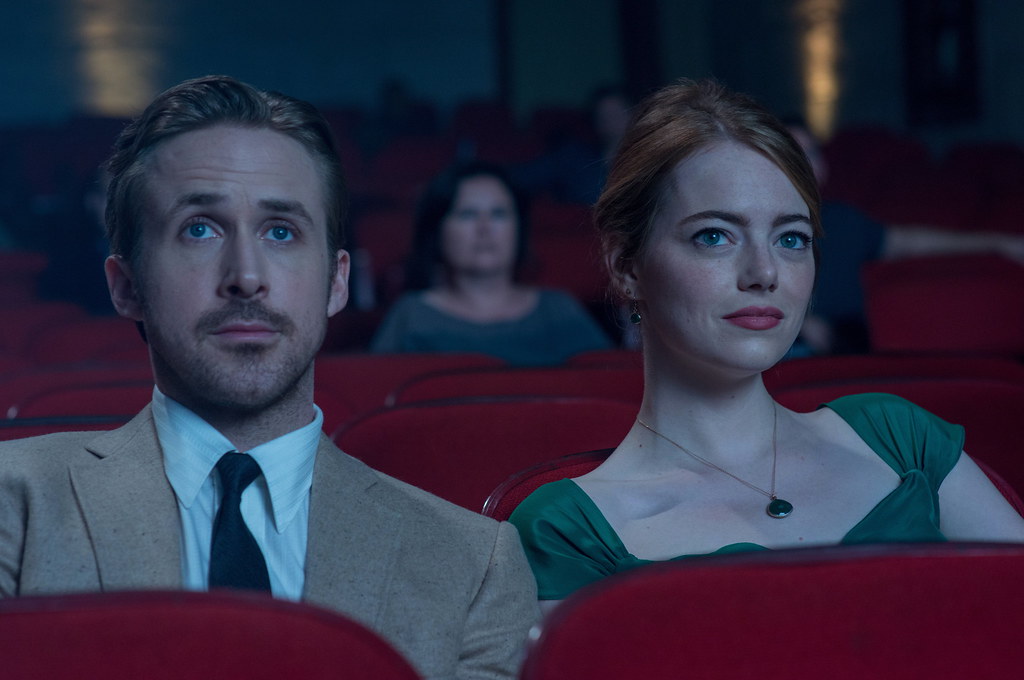
And now for the main event, drum roll please! LaLa Land! Written and directed by Damielle Chazelle, this musical tells the story of two struggling dreamers in LA trying to leave their impression on the world while also juggling the love they have for each other. Spoiler alert, that doesn’t go well for them in the end.
Struggling actress Mia Dolan is played by the lovely Emma Stone and underappreciated jazz artist Sebastian Wilder is played by lovable Ryan Gosling. Having both of these amazing actors play in a movie is always the starter recipe to a successful film. They both gave a remarkable performance and I applaud them. Continuing with the plot, Mia and Sebastian meet under prickly circumstances. They constantly butt heads and were ruder towards each other than not. Eventually, when they actually have a conversation, no one can deny that the chemistry between them is tangible.
Considering that every time they bumped into each other–prior to their relationship–was dependent solely on circumstance, it wouldn’t be completely outlandish to assume that fate was the main factor that brought them together. Ironically enough, fate was also the main factor that tore them apart. Once they got together, both of their careers began to develop. Sebastian was starting to become a big time jazz guy and Mia was finally carving space in the film industry for herself. They helped each other climb up their own ladder and forgot that their ladders were leading in different directions. They indirectly made the wedge that drove them apart. The film is masterfully constructed and eloquently showcases the realistic outcomes of what happens when two dreamers get together. Right person, wrong time.
This is another film that people don’t typically see the big picture in. People think that just because the main couple split up, that automatically makes it a bad thing. Personally, I think it’s a beautiful story that didn’t focus on money-grabbing and actually cared about making a story flow fluidly. A lot of films that focus solely on making a relationship as realistic as possible tend to portray the most obvious aspects. These being the messier parts of a relationship and how people don’t click in real life like they do in the movies. But the thing that makes this film so interesting is that it is your classic romance. Two people with amazing chemistry that go together great. They did all the right things and clicked almost immediately. But in the end, things still just didn’t turn out well for them and I think that’s the most realistic outcome of all time.
Let’s dive into their breakup. Mia was the first to break up with Sebastian when he chose to prioritize success over making it on time to the showcasing of Mia’s play. The thing is, Sebastian’s career wasn’t even what he wanted in the first place. The once overzealous and pretentious Sebastian wanted nothing more than to revive classic jazz back into society. When a friend offers him the opportunity to get involved in a pop jazz band, he reluctantly joins because he feels as though he has no other choice. In actuality, all the band provided him was opportunity and success. As a result, he got lost in the sauce and forgot the love he had for jazz. In this moment of reflection, he realizes the error in his ways and goes to find Mia. Not to get back together with her, but instead to remind her that she needs to follow her dream even if success isn’t promised to her.
From Mia’s perspective, while Sebastian is living it up and getting photoshoots left and right like some kind of celebrity, Mia is losing hope in her own dreams. Her plan to success was to write her own play that she can star in herself and showcase her talent. When this doesn’t go as planned–and she seems to be losing the support of Sebastian–she gives up completely. On both her dreams and her strained relationship with Sebastian. This is when she runs home and neglects the audition notice that might just be another rejection. However, Sebastian convinces her that she needs to follow her dreams no matter the outcome and continue to work at it because that’s what she loves, not because it will actually guarantee reward.
This is when the iconic scene plays of Mia sitting across the jazz bar and Sebastian playing the notorious melody on his piano. In this timeskip, Mia is an established actress and she got married and even had a kid. On the other hand, Sebastian is successful in his career and instead of being in a relationship, he stays single–which I believe is the best outcome for him. Through the melody, the audience falls into a trance and we enter a montage scene of what could have been between Mia and Sebastian if things did work out. It leaves a bittersweet feeling in the viewer and that’s what makes this movie particularly memorable. Its ability to capture the audience into a moment and make them feel as though the story is worth living vicariously through.
The best part about this film is that the message the viewer picks up on can change depending on how they chose to feel each moment and the outcome always makes sense. I’ve watched this movie a few different times in my life and each time it always made sense in completely different ways. Whether you want to take the ending in its bitter taste or its sweet acceptance is entirely up to you. Whatever message you’re truly ready to listen to at whatever stage of life you’re going through is the message you’re going to get.
Since you’re spending a day of love alone, you’re either bitter or happy. There really is no in between. Which is why this film has to have first place when it comes to watching to watch. It’s inclusive to everyone watching, whether the immature or the seasoned. LaLa Land is one for the people.