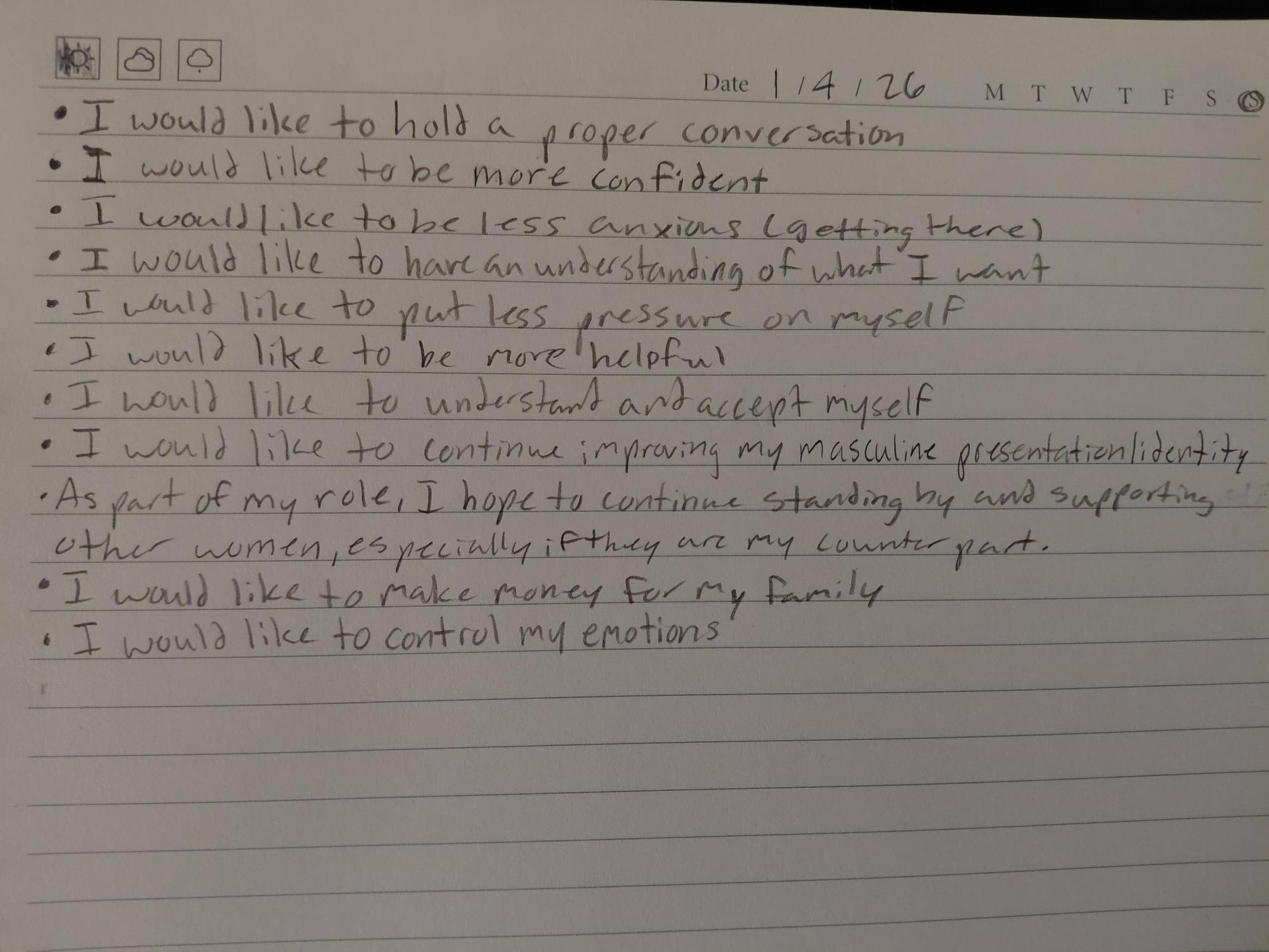
With every new year that arrives, a common practice that never fails to follow is the consistent tradition of New Year’s resolutions. In simple terms, New Year’s resolutions are a list of goals created by people who hope to improve something about themselves that they failed to change the previous year. While this is not always the case, it is for the majority of people who participate in New Year’s resolutions.
However, most New Year’s resolutions are immediately disregarded after their establishment, which poses the questions: Why do people make resolutions if they know they’ll fail to enforce them? Could there be a deeper reason behind the concept?
Author’s Interpretation
The overall tradition seemed like a waste of time after figuring out that most people never go through with their resolutions, especially when these people acknowledge this fact for themselves. For example, New Year’s resolutions have turned into a running joke on social media, where people make fun of themselves for failing not long after they set up their resolutions.
After some deep thinking, it seems like New Year’s resolutions have always been treated like a joke, even during childhood, when the world appeared brighter and more mature. In fact, the more in-depth analysis would be that these jokes are a coping mechanism for people who can’t see themselves accomplishing certain goals, so they instead choose joke about the idea.
Therefore, this creates the reality that most participating individuals do want to accomplish the very resolutions they make jokes about, but their overwhelming internal insecurity is what’s getting in their way. In comparison to people who have successfully followed through with their New Year’s resolutions, there’s a very noticeable sense of determination that has been building up over the years.
These people have struggled with insecurity too, but between living a life of longing versus freedom from something that’s been holding them back, there’s a clear winner, and only now do they have the strength to fight for it. If longtime yearners can take New Year’s resolutions seriously, then perhaps the issue has never been the tradition itself, but the harsh reality society forces on itself and others.
If someone’s New Year’s resolution is to lose weight, they might reflect on failed attempts caused by a fear of incapability, especially if they’re surrounded by people who have caught them in the act and shut down their confidence. If someone wants to improve at a subject or hobby, they might face unrealistic expectations that not even their existing talent can reach. Even the state of a person’s economy is enough to crush their dreams.
Sometimes it’s easier to give up on a dream when the road is created to be impossible, no matter the level at which an individual joins the race. For that reason, maybe New Year’s resolutions should be treated as reminders instead of goals set in stone for people who have something worth fighting for. Not only would this explain the growing determination that eventually pushes them to do so, but it would also make things easier.
A person might not be able to follow through with their goals at the moment, but they at least have an understanding of what they want, which is better than nothing. And of course, there’s always next year! Time limit or not, stressing over the undetermined future will only expand the distance between someone and their goals.
New Year’s resolutions are a personal checkpoint, not a guaranteed promise. No one has truly “failed” a resolution; it either simply didn’t work out for them, or they’re at a point in their life where it’s just not possible yet. And that’s completely okay! Progress will show in due time, so perhaps consider viewing New Year’s resolutions in a less demanding light.